


Quick Summary
To make tomato sauce without sugar, use ripe plum tomatoes, roast them with garlic at 425°F for 30 to 40 minutes, then simmer the blended sauce over medium-low heat for 20 to 30 minutes. Roasting and slow cooking concentrate the tomatoes' natural sweetness, so the sauce needs no added sugar.
- Choose plum or Roma tomatoes, which have less water and cook down into a thick sauce.
- Roast tomatoes and garlic at 425°F for about 30 to 40 minutes until edges char slightly.
- Simmer the blended sauce over medium-low heat for 20 to 30 minutes, stirring often.
- If the sauce still tastes sharp, add one small grated carrot or a roasted red bell pepper.
- Store refrigerated sauce for up to five days, or freeze it in portions for up to three months.
Table of Contents
- What You'll Need to Make Sugar-Free Tomato Sauce
- Choosing Tomatoes: Variety and Ripeness Matter
- Step-by-Step: Roasting, Blending and Simmering Your Sauce
- How to Balance Acidic Tomato Sauce Without Refined Sugar
- Troubleshooting, Storage and Using Sugar-Free Tomato Paste
- Make Your Next Batch Sugar-Free With Our Marinara
- Frequently Asked Questions
What You'll Need to Make Sugar-Free Tomato Sauce
Last Updated: November 7, 2026
Making tomato sauce without sugar is easier than most people expect. The trick is knowing which ingredients carry natural sweetness and how to coax it out.
The basic kit is simple. You need ripe tomatoes, a few cloves of garlic, good olive oil, fresh basil, salt, and black pepper. A heavy pot, a food processor or blender, and a rimmed baking sheet for roasting will cover the rest.
Here is a short list of what to gather before you start:
- Ripe tomatoes: Plum or Roma tomatoes are a common choice for a thick sauce.
- Garlic: Two to four cloves, peeled. Roasting them adds sweetness.
- Extra-virgin olive oil: About two tablespoons for roasting and sautéing.
- Fresh basil and herbs: A handful added near the end.
- Salt and black pepper: Season in stages, not all at once.
- Optional natural sweeteners: Carrot or a small amount of roasted onion.
Skipping the roasting step is a common shortcut. Roasting concentrates the tomatoes' natural sugars.
Choosing Tomatoes: Variety and Ripeness Matter
Tomato choice has a bigger effect on sweetness than almost any other decision. Plum tomatoes have less water and more flesh, so they cook down into a thick, concentrated sauce.
Ripeness matters just as much. Fully ripe tomatoes tend to be sweeter and less acidic. Pale or underripe tomatoes will make a sharp sauce that tempts people to add sugar. Pick tomatoes that smell fragrant and give slightly under gentle pressure.
Canned whole peeled tomatoes are a practical option when fresh tomatoes are out of season. Read labels and choose cans with a short ingredient list.
Step-by-Step: Roasting, Blending and Simmering Your Sauce
Follow these steps for a smooth, naturally sweet sauce:
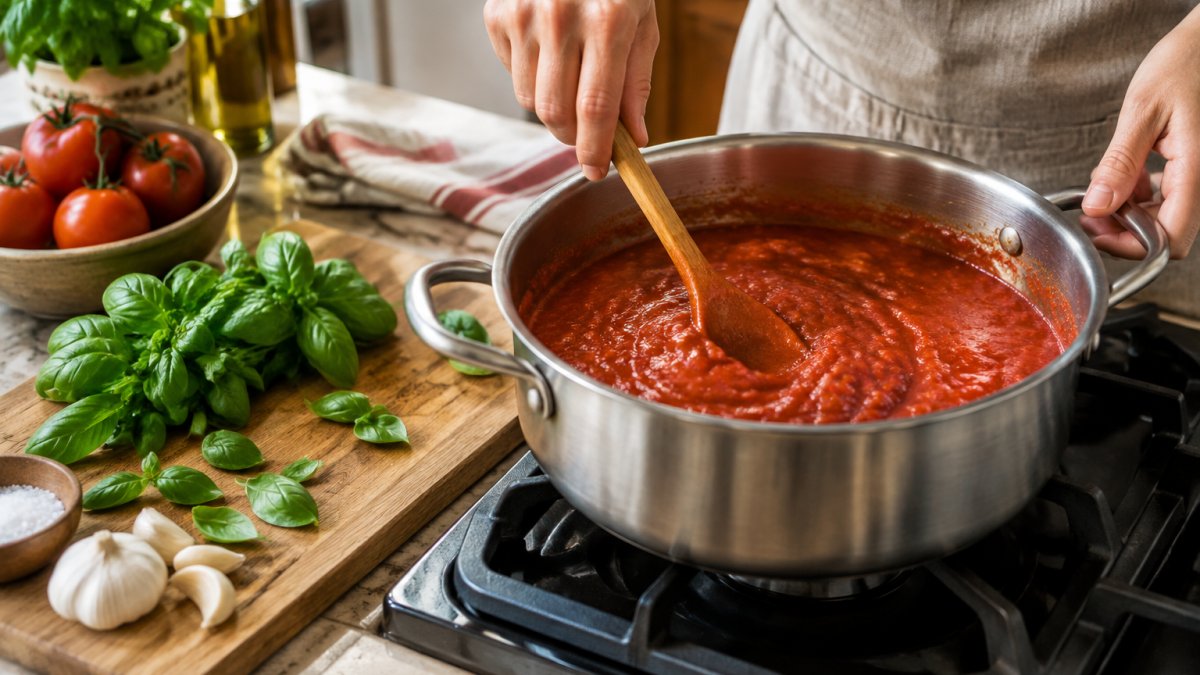
- Heat the oven to 425°F. Roast tomatoes and garlic until edges char slightly, about 30 to 40 minutes.
- Cool briefly. Let the tomatoes rest for 10 minutes so they are safe to handle.
- Blend to your texture. Pulse in a food processor for a chunky sauce, or blend until smooth.
- Simmer in a heavy pot. Cook over medium-low heat for 20 to 30 minutes, stirring often.
- Finish with herbs. Stir in basil in the last five minutes of simmering.
Expect the sauce to reduce noticeably during simmering as the water evaporates.
Natural Ways to Sweeten Tomato Sauce
If a sauce still tastes sharp, a few natural ingredients can soften it. Grated carrot cooks down sweet and adds body. A small amount of caramelized onion works well too. Roasted red bell pepper adds mild sweetness with depth. Carrot, onion, and roasted pepper show how layered ingredients can balance acidity and build flavor without sugar, a principle echoed in Pepper Song.
Use these sparingly. Add one ingredient at a time and taste between additions. A sauce that needs only a little help is better than one loaded with sweetening agents.
Adding Garlic, Herbs and Seasoning
Garlic and herbs build the savory base that makes sugar unnecessary. Roasted garlic gives a mellow, nutty taste, while raw garlic sharpens the sauce. Add fresh basil, oregano, or thyme near the end of cooking so the aromas stay bright.
Season in stages. Add a pinch of salt when you start simmering, then adjust once the sauce has reduced. Black pepper goes in last.
How to Balance Acidic Tomato Sauce Without Refined Sugar
Acidity is the main reason people reach for sugar, but sugar only masks it. To learn how to make a dairy-free marinara taste rich and smooth, see How to Make Dairy-Free Marinara Sauce Taste Rich. The better approach is to match the fix to the cause.
Here is how the common non-sugar methods compare:
| Method | How It Works | When to Use It | Quantity and Timing | Effect on Texture |
|---|---|---|---|---|
| Longer, slower simmer | Heat mellows sharp volatile acids and concentrates natural sugars | Any sauce that tastes thin or harsh | 20 to 45 extra minutes over low heat, stirring every 10 minutes | Thickens and concentrates |
| Grated carrot | Carrot's natural sugars and fiber round out sharpness | Thick, chunky, or meat-style sauces | 1 small carrot (about 2 oz.), grated, per 4 cups of sauce; add at the start | Adds body and slight sweetness |
| Ripe or roasted tomatoes | Ripeness lowers acidity at the source; roasting caramelizes sugars | Fresh sauces and when tomatoes are marginal | Roast at 425°F for 30 to 40 minutes until edges char | Concentrates and deepens color |
| Caramelized onion | Slow-cooked onion sugars add sweetness and savory depth | Smooth, long-simmered sauces | 1 medium onion per 4 cups, cooked 20 to 25 minutes until deep golden | Smooths and thickens slightly |
| Pinch of baking soda | Chemically neutralizes acid almost instantly | Canned tomato sauces that taste metallic or sharp | 1/8 teaspoon per quart, stirred in off heat; taste before adding more | Minimal, but too much makes sauce soapy |
| Roasted red bell pepper | Mild sweetness with vegetal depth | Sauces where you want sweetness without carrot flavor | 1 roasted pepper per 4 cups, blended in | Slightly silkier |
A few practical rules keep these fixes from backfiring. Add one adjustment at a time and taste between additions; stacking three sweeteners turns a sharp sauce into a muddy one. Baking soda is the fastest fix but the easiest to overdo, so measure it rather than shaking it in.
Watch out: if a sauce still tastes acidic after 45 minutes of simmering and a small carrot, the problem is usually the tomatoes themselves, not the cooking method. Switch to riper fruit or a brand of canned tomatoes packed without added sugar and with lower sodium, which tends to taste less sharp.
If you want to understand why this works, the mechanism is simple: tomato acids are volatile and dissipate with heat, while natural sugars concentrate as water evaporates. Slow cooking does both at once, which is why it beats any single added ingredient.
Troubleshooting, Storage and Using Sugar-Free Tomato Paste
Most problems with sugar-free sauce fall into a handful of patterns, and each has a concrete fix that does not involve adding sugar.
Watery sauce. Tomatoes vary in water content, and plum varieties release less than beefsteak.
Bitter sauce. Bitterness usually comes from scorched garlic, over-roasted tomato skins, or underripe fruit. If the garlic browned past golden, start a fresh batch of aromatics in a clean pan and stir them into the sauce at the end.
Too-thick sauce. Loosen with a few tablespoons of water, low-sodium stock, or the liquid from the tomato can. Add a tablespoon at a time; sauce thickens again as it cools.
Still acidic after cooking. Return the pot to low heat for another 15 to 20 minutes, or stir in 1/8 teaspoon of baking soda per quart and taste before adding more. If the sharpness persists, the tomatoes were likely underripe; note the variety for next time.
Flat or dull flavor. Salt added in stages, a finishing drizzle of extra-virgin olive oil, and fresh herbs stirred in off heat restore brightness.
Storage. Cool sauce uncovered for no more than two hours, then refrigerate in an airtight container for up to five days. Freeze in portioned containers or ice cube trays for up to three months; leave headspace because sauce expands as it freezes.
Canning safety. Refrigerator and freezer storage are not the same as shelf-stable canning. Home canning of tomato sauce requires tested processing times and acidity levels; consult current guidance from the USDA and the National Center for Home Food Preservation before canning (Canning Tomatoes, Introduction).
Using sugar-free tomato paste. Tomato paste without added sugar is a concentrated flavor base. Stir 1 to 2 tablespoons into a pot of sauce for depth, or spread a thin layer on a sheet pan of vegetables before roasting.
Make Your Next Batch Sugar-Free With Our Marinara
Homemade sauce takes time, and that is where we can help. Our Tomato Basil Marinara Sauce ($25.99, 24-oz.) brings fresh, herb-forward flavor with no sugar added. For a deeper savory taste, try our Roasted Garlic Marinara Sauce ($25.99, 24-oz.), made with roasted garlic and imported Italian tomatoes. Both are vegan and gluten-free.
Try the Tomato Basil or Roasted Garlic sauce in your next pasta night.
Frequently Asked Questions
Can I make homemade tomato sauce without sugar?
Yes. Ripe, well-roasted tomatoes contain enough natural sweetness to make a balanced sauce without any added sugar. Roasting concentrates the sugars and deepens the flavor, so the sauce tastes rounded rather than sharp. If your tomatoes are underripe or unusually acidic, you can add a small amount of grated carrot or a single pitted date during simmering. Taste as you go, since sugar-free sauces depend on careful seasoning and good tomato selection.
What can I use instead of sugar for tomato sauce?
Grated carrot is the most common substitute because it adds sweetness and body as it cooks down. Roasted red bell pepper, a small amount of caramelized onion, or one or two pitted dates also work well. Each option changes the flavor slightly, so start with a small quantity and adjust. Extra-virgin olive oil can help round out the finish.
How can I make tomato sauce less acidic without sugar?
Roast the tomatoes first to mellow their acidity, then simmer the sauce longer so the flavors concentrate. Adding grated carrot, a splash of good olive oil, or a pinch of baking soda (used sparingly) can reduce sharpness. Fresh basil and a little black pepper also help balance the taste. Always taste before adding more of any single ingredient.
How should I store homemade sugar-free tomato sauce?
Let the sauce cool to room temperature, then transfer it to airtight containers. It keeps in the refrigerator for about 4 to 5 days. For longer storage, freeze it in freezer-safe containers for up to 3 months. Refrigerate it promptly and reheat only the portion you plan to use.


