


Last Updated: November 5, 2026
Quick Summary
Marinara sauce is a simple tomato-based sauce built on tomatoes, olive oil, garlic, and herbs, with onion, basil, salt, and oregano or parsley rounding out the classic set. Real marinara rewards restraint, not a long shopping list, and it is quick, bright, and tomato-forward rather than a simmer-all-day sauce.
- Canned tomatoes are picked at peak ripeness and cooked down already, giving consistent flavor all year.
- If you go fresh, choose plum-style tomatoes for less water and more flesh.
- To fix a sharp sauce, simmer 10 to 15 minutes longer, then adjust with salt and a small amount of fat.
- Cook one to two tablespoons of tomato paste in the oil with the garlic for a minute first.
- Serve marinara hot over pasta, as a pizza base, or as a dipping sauce.
Table of Contents
- The Classic Marinara Sauce Ingredient Set
- Marinara Sauce from Fresh Tomatoes vs. Canned Tomatoes
- Marinara Sauce Without Sugar: Adjusting Acidity Naturally
- Marinara Sauce with Tomato Paste: When and How to Use It
- How to Serve Marinara Sauce
- Frequently Asked Questions
The Classic Marinara Sauce Ingredient Set
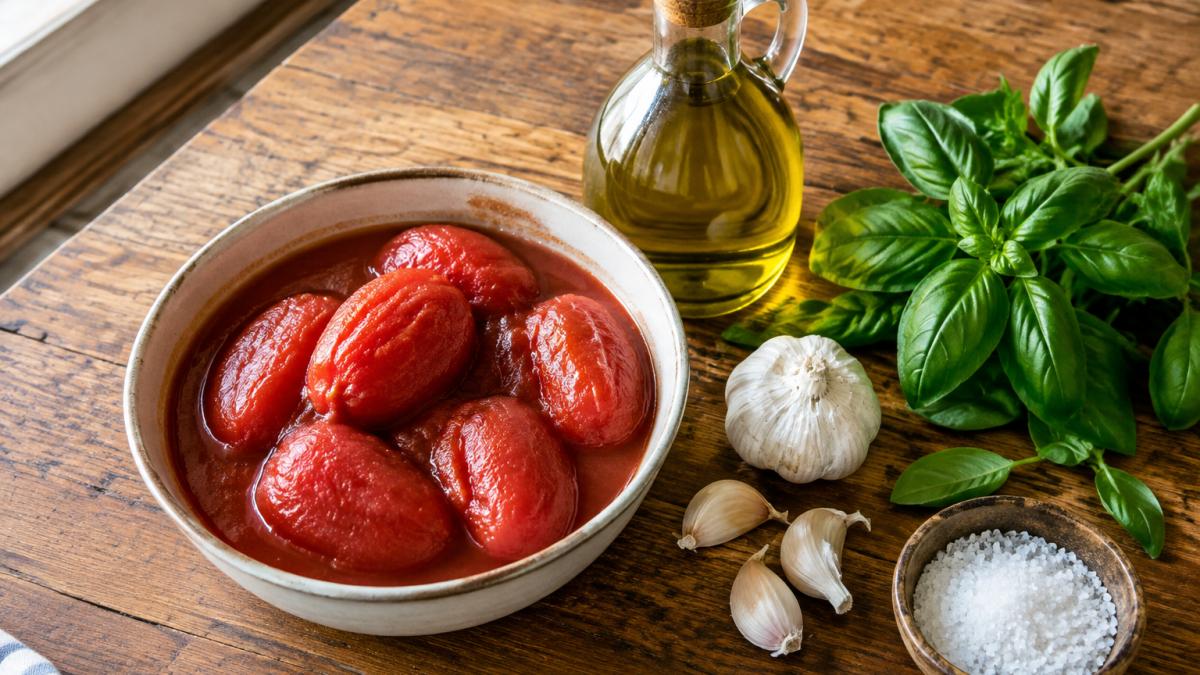
Marinara sauce is a simple tomato-based sauce built on tomatoes, olive oil, garlic, and herbs. That short list is the whole point. Real marinara rewards restraint, not a long shopping list.
Here is the classic set:
- Tomatoes - whole peeled or crushed, the base
- Olive oil - carries flavor and adds body
- Garlic - the backbone aromatic
- Onion - optional, adds sweetness
- Basil - fresh or dried
- Salt - balances acidity
- Oregano or parsley - a finishing herb
What most guides miss is that marinara is not a simmer-all-day sauce. It is quick, bright, and tomato-forward. Anything that buries the tomato, like heavy cream or a pile of spices, pushes it toward a different sauce entirely.
Marinara Sauce from Fresh Tomatoes vs. Canned Tomatoes
Canned tomatoes are a practical choice for many home cooks. They are typically picked at peak ripeness and cooked down already, so you get consistent flavor all year. Fresh tomatoes are at their best for a few weeks in late summer, when the fruit is sweet enough to eat raw.
The practical breakdown:
- Fresh tomatoes: best in season, need peeling and seeding, more work, brighter flavor
- Canned whole peeled tomatoes: consistent, affordable, easy to crush by hand
- Crushed tomatoes: thicker body, less control over texture
- Tomato sauce: thinner, already seasoned, less predictable
If you go fresh, choose plum-style tomatoes. They have less water and more flesh, which means a thicker sauce without long cooking. USDA seasonal produce guidance is a useful reference for what is actually in season near you.
Marinara Sauce Without Sugar: Adjusting Acidity Naturally
You do not need sugar to fix a sharp sauce. Sugar masks acidity; it does not solve it. A better move is to let the sauce simmer longer, which mellows the tomato naturally, then adjust with salt and a small amount of fat.
Try these fixes in order:
- Simmer 10 to 15 minutes longer, uncovered
- Add a pinch more salt
- Stir in a small splash of olive oil
- Add a grated carrot and simmer, then remove it
- Finish with a knob of butter only if you are not keeping it dairy-free
Watch out: adding sugar early hides the problem and makes the sauce taste flat. Taste first, then adjust.
This is why we build our sauces with no added sugar. A slow-cooked tomato does not need it.
Marinara Sauce with Tomato Paste: When and How to Use It
Tomato paste is a thickener and a flavor booster, not a required ingredient. Use it when your tomatoes are watery or you want a deeper, richer sauce. Skip it when you want a bright, fresh-tasting marinara.
How to use it well:
- Add one to two tablespoons
- Cook it in the oil with the garlic for a minute first
- Then add your tomatoes
That quick fry removes the tinny taste and builds depth. Add paste straight into the pot with the tomatoes and you get a dull, cooked-out flavor instead.
For a quick weeknight version, a spoon of paste plus good canned tomatoes gets you close to a slow-simmered result in far less time.
How to Serve Marinara Sauce
Serve marinara hot over pasta, as a pizza base, or as a dipping sauce. It is one of the most flexible sauces in the kitchen, and it holds up across all three.
Quick serving guide:
| Use | How to serve | Tip |
|---|---|---|
| Pasta | Toss with cooked pasta plus a splash of pasta water | Finish in the pan, not on the plate |
| Pizza | Spread thin, leave a border | Do not overload |
| Dipping | Warm, with bread or mozzarella sticks | Add fresh basil at the end |
| Eggs | Spoon over poached or baked eggs | A spoonful of paste deepens it |
Store leftovers in the fridge and use within a few days, or freeze in portions for later.
Frequently Asked Questions
What are the basic ingredients in marinara sauce?
The classic set is tomatoes, olive oil, garlic, basil, and salt. Many recipes add onion, oregano, or a pinch of red pepper flakes. Marinara sauce is defined by what it leaves out: no meat, no heavy cream, and no long simmering of bones or vegetables. A traditional recipe keeps to this core, with no added sugar.
Does traditional marinara sauce contain sugar?
No. Traditional marinara sauce does not include sugar. Some cooks add a pinch to balance acidic tomatoes, but it is not a required ingredient. You can make marinara sauce without sugar by using sweet onions, carrots, or a longer simmer to bring out natural sweetness. Marinara made with no sugar added lets the tomato flavor lead.
Is marinara sauce vegan and gluten-free?
Classic marinara sauce is both vegan and gluten-free when made with tomatoes, olive oil, garlic, herbs, and salt. Check labels for added cheese, butter, or thickeners. Marinara that is vegan, non-dairy, and gluten-free fits clean-label and plant-based diets.
Marinara is proof that a few good ingredients beat a long list. If you want that slow-cooked, clean-label flavor without the work, Antonio Carlo Gourmet Sauces makes it simple: a third-generation Italian-style recipe, ingredients imported from Italy, no added sugar, and fully vegan, gluten-free, and Whole30 Approved. Get started with Antonio Carlo Gourmet Sauces and put real marinara on the table tonight.


