


Last Updated: November 10, 2026
Quick Summary
Authentic clean-label marinara starts with a short list of ripe tomatoes, good olive oil, garlic, onion, fresh basil and salt, with no added sugar, preservatives or thickeners. Cook it on low for 45 minutes to 2 hours, stirring every few minutes, to build deep, rich flavor at home.
- Choose plum-type tomatoes, since their lower water content gives a thicker sauce.
- Simmer on low heat for 45 minutes to 2 hours, stirring every few minutes.
- Soften onion slowly in olive oil for 8 to 10 minutes until translucent, not browned.
- Add fresh basil at the end, off the heat, to keep its brightness.
- Cool sauce within 2 hours and freeze with half an inch of headspace.
Table of Contents
- What Ingredients Are in Marinara Sauce?
- Choosing the Best Tomatoes for Marinara Sauce
- How Long to Simmer Marinara Sauce for Deep Flavor
- Building Richness Without Added Sugar
- Stocking Your Kitchen With Clean-Label Marinara
- Frequently Asked Questions
What Ingredients Are in Marinara Sauce?
Authentic marinara sauce starts with a short list: ripe tomatoes, good olive oil, garlic, onion, fresh basil, and salt. Break down the ingredients that define real marinara to see how each one shapes the final flavor. Clean-label marinara keeps that list just as short, with nothing added to replace flavor. This guide walks through how to build that flavor at home, from the ingredients up.
A clean-label sauce usually skips added sugar, preservatives and thickeners. Our Original Handcrafted Marinara Sauce follows the same idea: imported Italian tomatoes, cold-pressed olive oil and a slow-simmered base, with no fillers. Order the original recipe directly.
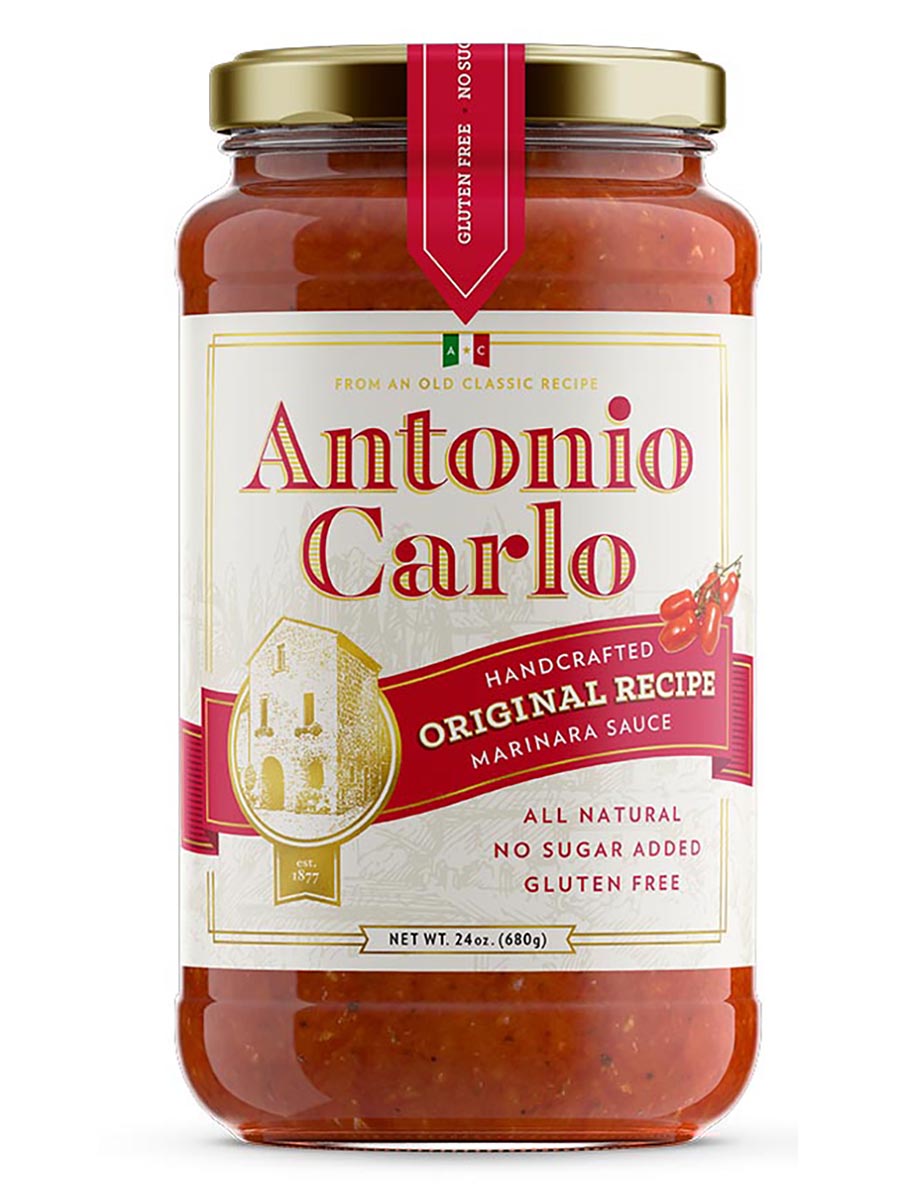
What to look for on the label:
- Tomatoes listed first, with no sugar added
- Olive oil, not a blend of cheap seed oils
- Basil or herbs you can actually recognize
- No preservatives or artificial thickeners
Start with the list, and you will know quickly whether a jar or a recipe is worth your time.
Choosing the Best Tomatoes for Marinara Sauce
Tomatoes do most of the work in marinara, so they matter more than anything else on the shelf. Plum-type tomatoes are the usual choice because they have less water and more flesh. That means a thicker sauce with less cooking time.
A roasted garlic marinara shows how a different tomato base can carry a bolder, savory profile. The principle holds at home too: pick tomatoes for flavor, then let the simmer do the rest.
How Long to Simmer Marinara Sauce for Deep Flavor
Simmering is where a thin sauce becomes a rich one. Most home cooks find that 45 minutes to 2 hours on low heat gives the best depth, with the sauce bubbling gently and not boiling hard. Longer simmering concentrates the tomato flavor and softens the sharp acidity.
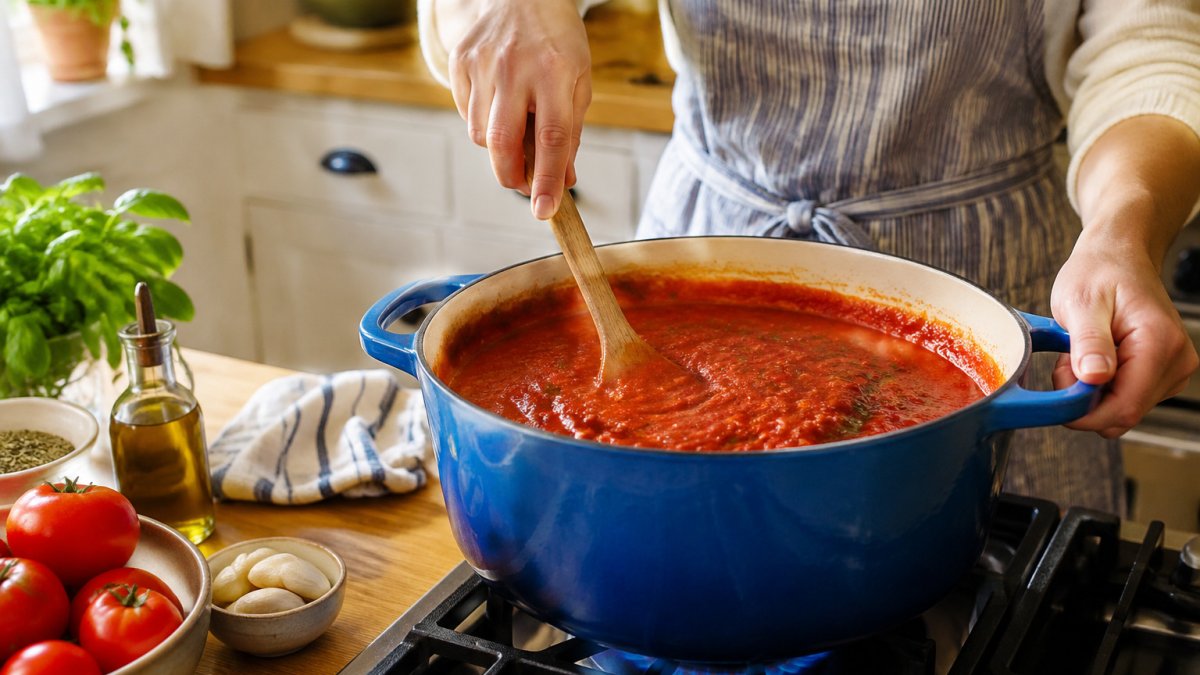
Stir every few minutes so the bottom does not scorch. Keep the lid partly open so the sauce reduces.
Troubleshooting Sauce Texture and Flavor
Sauce too thin? Simmer uncovered for another 15 to 20 minutes.
Sauce too sharp or acidic? Cook it longer. Resist adding sugar first.
Sauce too bland? Add a pinch of salt and a small splash of olive oil at the end, then taste again.
Simmer time and texture fixes are the quickest way to get a richer sauce, so here is a quick reference.
| Problem | Fix | Time |
|---|---|---|
| Sauce too thin | Simmer uncovered | 15 to 20 minutes |
| Sauce too sharp or acidic | Cook it longer, not sugar | Longer simmer |
| Sauce too bland | Add salt and a splash of olive oil | At the end, then taste |
| Overall simmer for depth | Gentle simmer, stir every few minutes | 45 minutes to 2 hours |
Building Richness Without Added Sugar
Most jarred sauces add sugar because tomatoes can taste sharp, especially when they are underripe or canned in a hurry. Learn how to make tomato sauce without added sugar using technique alone. At home you can balance that acidity with technique instead. The goal is to draw out the sweetness that is already in the tomatoes and let the sauce mellow over time. Explore more techniques for a rich sauce without dairy or sweetener.
Start by softening the aromatics slowly. Warm 3 tablespoons of extra virgin olive oil in a heavy 4-quart pot over medium-low heat, add one finely diced yellow onion, and cook for 8 to 10 minutes until it turns translucent and sweet, not browned. Add 4 cloves of thinly sliced garlic for the last 2 minutes. Rushing this step leaves a raw, sharp edge that no amount of simmering fully removes.
When you add the tomatoes, cook the sauce low and uncovered so moisture can escape. A gentle simmer around 190 to 200 degrees Fahrenheit is enough to break down the flesh and concentrate the sugars without scorching. You will know the sweetness is developing when the sauce turns from bright red to a deeper brick color and the sharpness fades into a rounder, savory flavor. That usually takes 45 minutes to an hour.
Finish with fresh basil torn in by hand and removed from the heat. Heat dulls basil quickly, so adding it at the end keeps its brightness and lets it balance the tomato without any sweetener.
Watch out: if the sauce still tastes harsh after an hour, add a pinch of salt and simmer 10 more minutes before reaching for anything else, because salt suppresses perceived acidity more cleanly than sugar does. Salt can soften a sharp marinara without masking its tomato flavor, and the same care in choosing simple ingredients matters when considering Bliss Tree New Jersey.
Stocking Your Kitchen With Clean-Label Marinara
A homemade batch of clean-label marinara is worth making in quantity, since the slow simmer takes time that is easiest to spend once. Cook a double batch on a weekend, then portion it so weeknight dinners need only a reheat.
Let the sauce cool to room temperature for no more than 2 hours, then move it to shallow airtight containers. Shallow containers cool faster and reduce the time the sauce spends in the temperature range where bacteria multiply.
For longer storage, freeze it. Leave about half an inch of headspace in freezer-safe containers or heavy zip-top bags laid flat, since the sauce expands as it freezes. Label each portion with the date.
When reheating, bring the sauce to a full simmer for at least a minute so it is heated through. Stir in a splash of water if it has thickened, and taste before adding salt, since flavors concentrate as sauce sits.
Watch out: do not leave thawed or cooked sauce on the counter to come to room temperature. If it has been out for more than 2 hours, discard it.
If you prefer to skip the long simmer on a busy night, a good jar of clean-label marinara can fill the gap. See what a premium clean-label jar should contain before you buy one. Check that tomatoes are the first ingredient and that the label lists no added sugar, thickeners, or preservatives, then use the time you save on the dishes that need it.
Making authentic marinara at home is a skill that improves with each pot. Antonio Carlo Gourmet Sauces makes the process easier with clean-label sauces that taste slow-cooked from the first spoonful. Try the Original Handcrafted Marinara Sauce and see the difference for yourself.
Frequently Asked Questions
What ingredients are in marinara sauce?
A traditional marinara needs only a few ingredients: ripe tomatoes, extra virgin olive oil, garlic, onion, fresh basil, salt, and sometimes a pinch of crushed red pepper. Clean-label versions use the same basics with no added sugar, preservatives, or artificial thickeners. Check jar labels for a short ingredient list. If you see sugar, citric acid, or gums, the sauce is not built on the traditional base.
How can you make marinara taste richer without adding sugar?
Slow cooking is the main tool. Simmering the sauce for an extended period concentrates the natural sweetness of ripe tomatoes and softens their acidity. Sautéing the onion and garlic slowly in olive oil before adding tomatoes also builds depth. A splash of good olive oil at the end adds body and a rounded finish, so the sauce tastes complete without any sweetener.
Which tomatoes are best for homemade marinara sauce?
Ripe, well-flavored canned whole tomatoes, such as San Marzano-style varieties grown in Italy, are a dependable choice for consistent results. Crush them by hand for better texture. Fresh tomatoes work well in summer when they are at peak sweetness, but they require longer cooking to break down. Choose whichever tomatoes you can source with good flavor and minimal ingredients.
How do you know if jarred marinara has added sugar or preservatives?
Read the ingredient list from the top. Tomatoes should come first, followed by olive oil, herbs, and salt. Sugar may appear as sugar, cane juice, or dextrose. Preservatives may appear as citric acid, potassium sorbate, or calcium chloride. Products labeled no sugar added and clean-label should list only whole food ingredients.


